A diplomatic symbol must carry a relationship
Summary
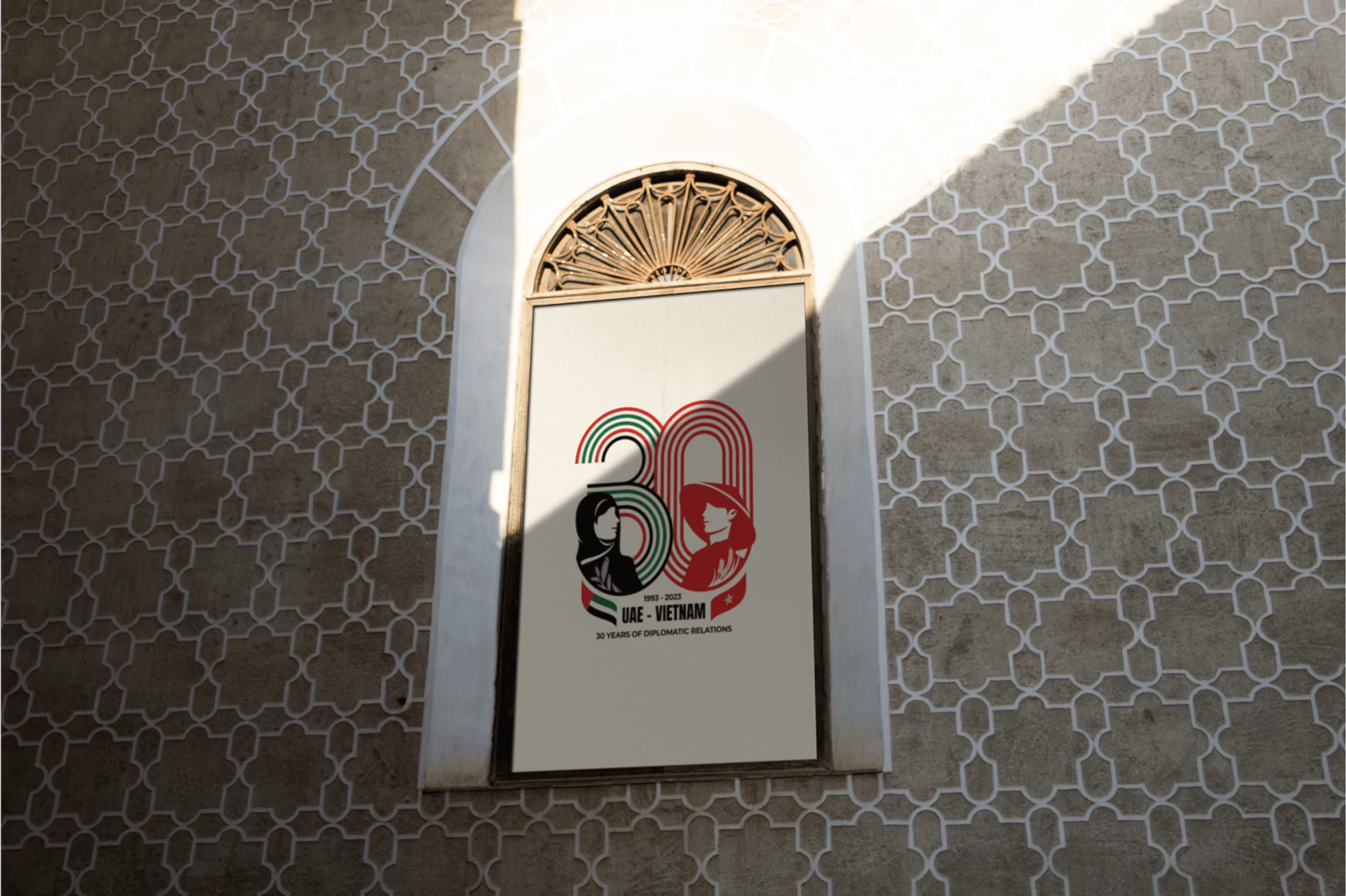
Designing a diplomatic symbol is not a matter of combining national motifs. For the 30th anniversary of Vietnam–UAE relations, CDA used cultural meaning, visual balance, and practical application to create an identity that could honor two nations and work beyond the ceremony.
A symbol should make the relationship legible
A diplomatic identity has a difficult job. It must honor distinct histories, avoid turning culture into ornament, and remain clear enough to work in a room, on a page, and on a screen.
For the 30th anniversary of relations between Vietnam and the United Arab Emirates, CDA designed an official symbol from that tension. The work brought together national references, compositional balance, and practical testing. This is the approach behind the mark, and what it taught us about designing for public meaning.
A diplomatic brief is a relationship brief
An anniversary mark begins with a date, but it cannot end there. For the 30th anniversary of diplomatic relations between Vietnam and the United Arab Emirates, the Embassy of Vietnam in the UAE commissioned CDA to make a relationship visible. That meant representing two countries without reducing their differences to a decorative mash-up.
Public and diplomatic symbols are read by many people at once. Officials may see protocol and national representation. Communities may look for recognition and respect. A wider audience may need a clear sign of what is being celebrated. The identity has to hold these readings together without becoming vague.
We therefore treated the brief as a relationship brief. Before drawing, we defined the values the symbol had to carry: mutual recognition, cultural specificity, continuity, and an invitation to look forward. These are not visual styles. They are conditions for making decisions. They tell us what to include, what to refuse, and how much the symbol should ask the viewer to understand at first glance.
A symbol becomes useful when its meaning is not trapped in the designer’s explanation. It should create a point of entry for people who know the history and for people meeting it for the first time.
Translate cultural references without flattening them
Cultural references are not a library of visual ingredients. Each one carries a history and a place in people’s lives. Borrowing them without understanding turns identity into costume. Using them with care can make a symbol feel grounded rather than generic.
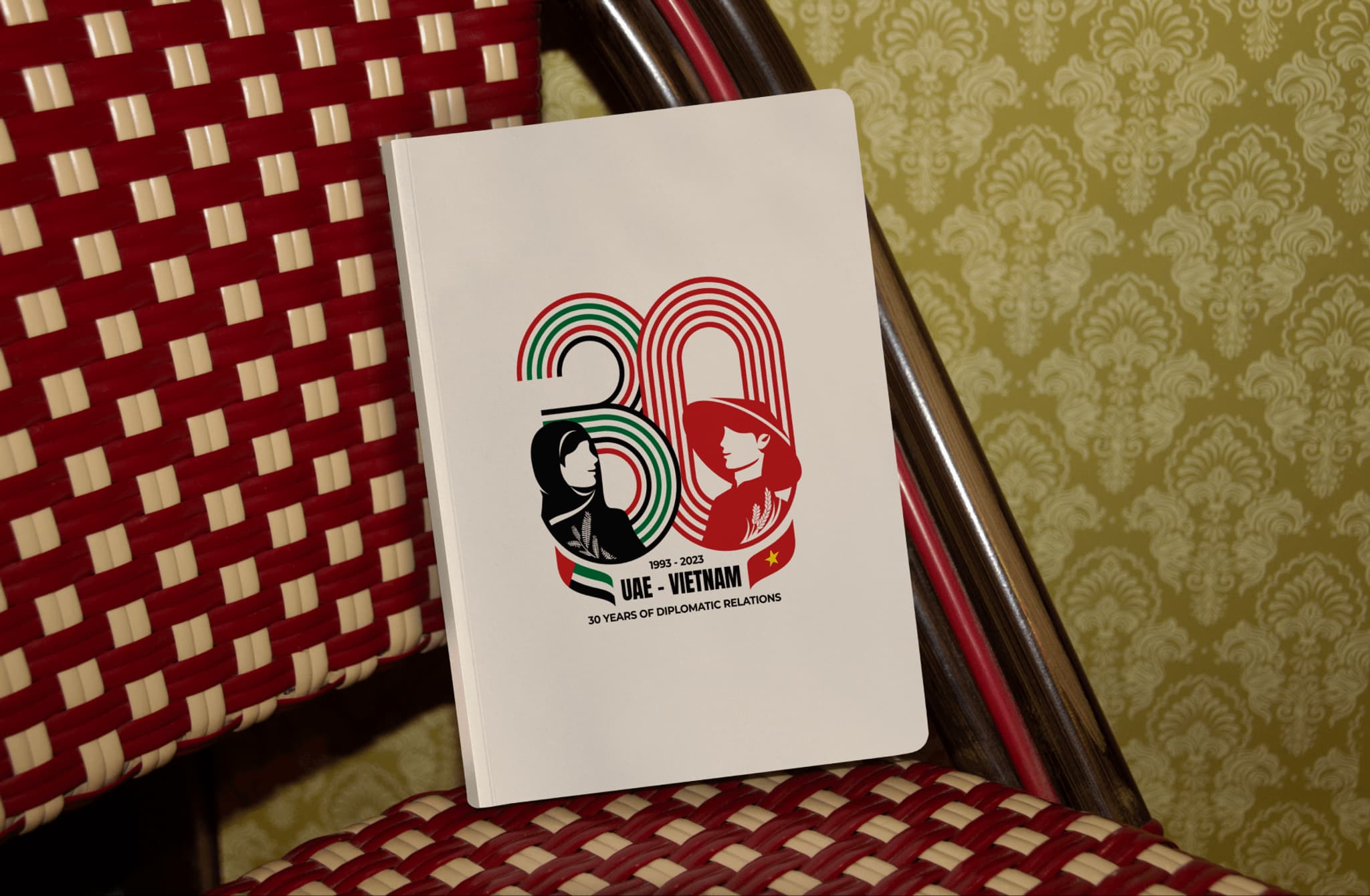
For this mark, the design brought together two figures in the áo dài and abaya, alongside the rice plant of Vietnam and the Ghaf tree of the UAE. The point was not to illustrate every aspect of either culture. It was to select a small set of references that could speak about people, place, continuity, and mutual respect.
Selection is only the beginning. We then asked how the references should meet. Should they sit side by side, interlock, or share a silhouette? Which details are essential for recognition, and which would make the symbol too literal? A diplomatic identity needs enough specificity to be meaningful, but enough restraint to remain open to both sides.
Balance here is not symmetry for its own sake. It is the visual expression of an ethical position: neither culture is background for the other, and neither is asked to stand in for the whole relationship. The mark should feel composed, not negotiated down to sameness.
We look for a visual relationship rather than a collection of symbols. The figures provide human presence. The botanical forms connect people to land, continuity, and care. The overall composition makes the anniversary a shared occasion rather than an exchange of separate emblems.
This is a principle we carry into CDA’s public-sector work, where identity has to earn trust across institutions and communities. Form follows responsibility.
Design the symbol for life beyond the launch
A diplomatic identity does not live only on an invitation or stage backdrop. It moves through official communications, print, signage, digital channels, commemorative objects, and images that may outlast the event. A concept that works in one presentation can fail when it is reduced, reproduced, translated, or placed beside other institutions.
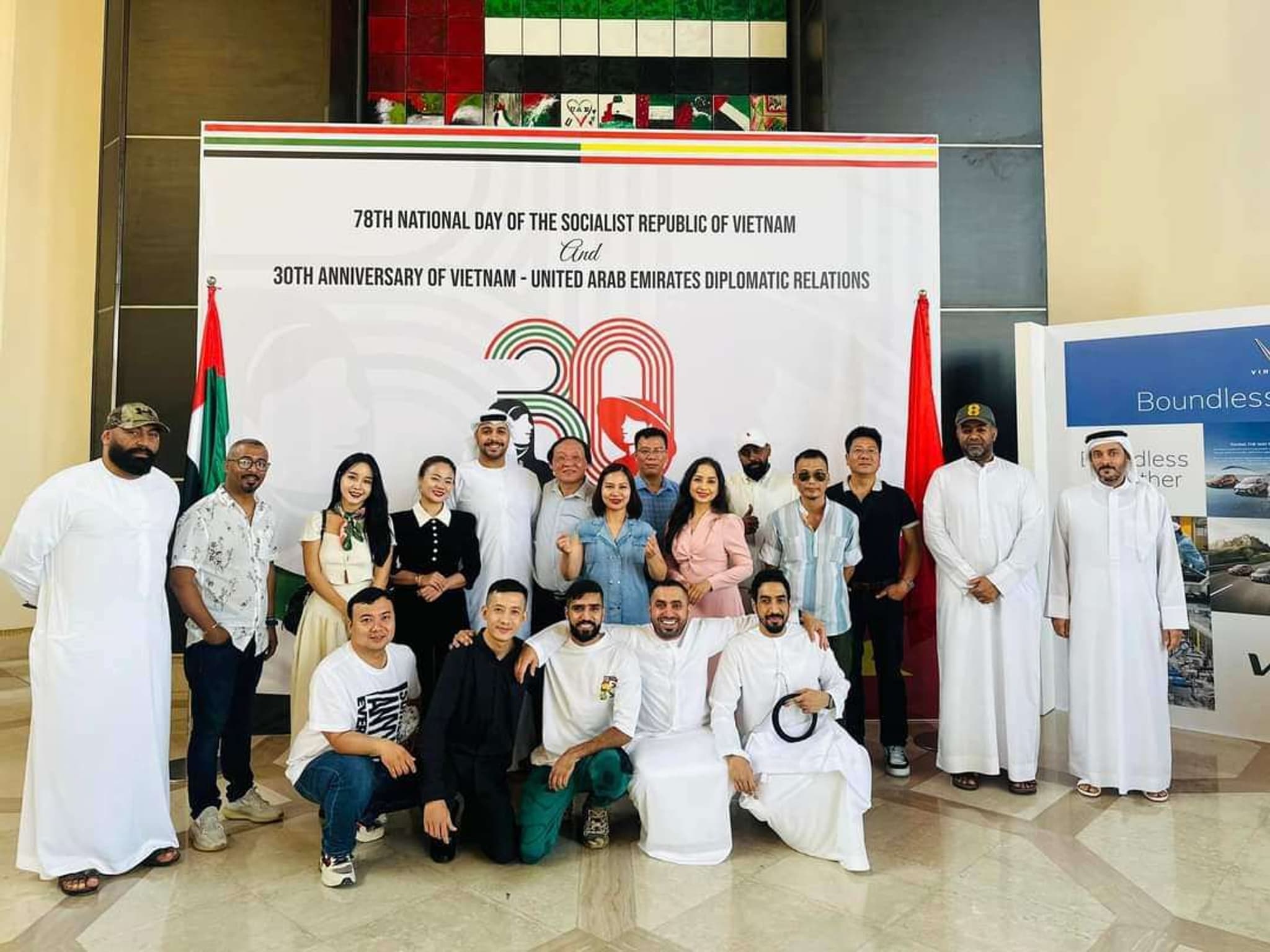
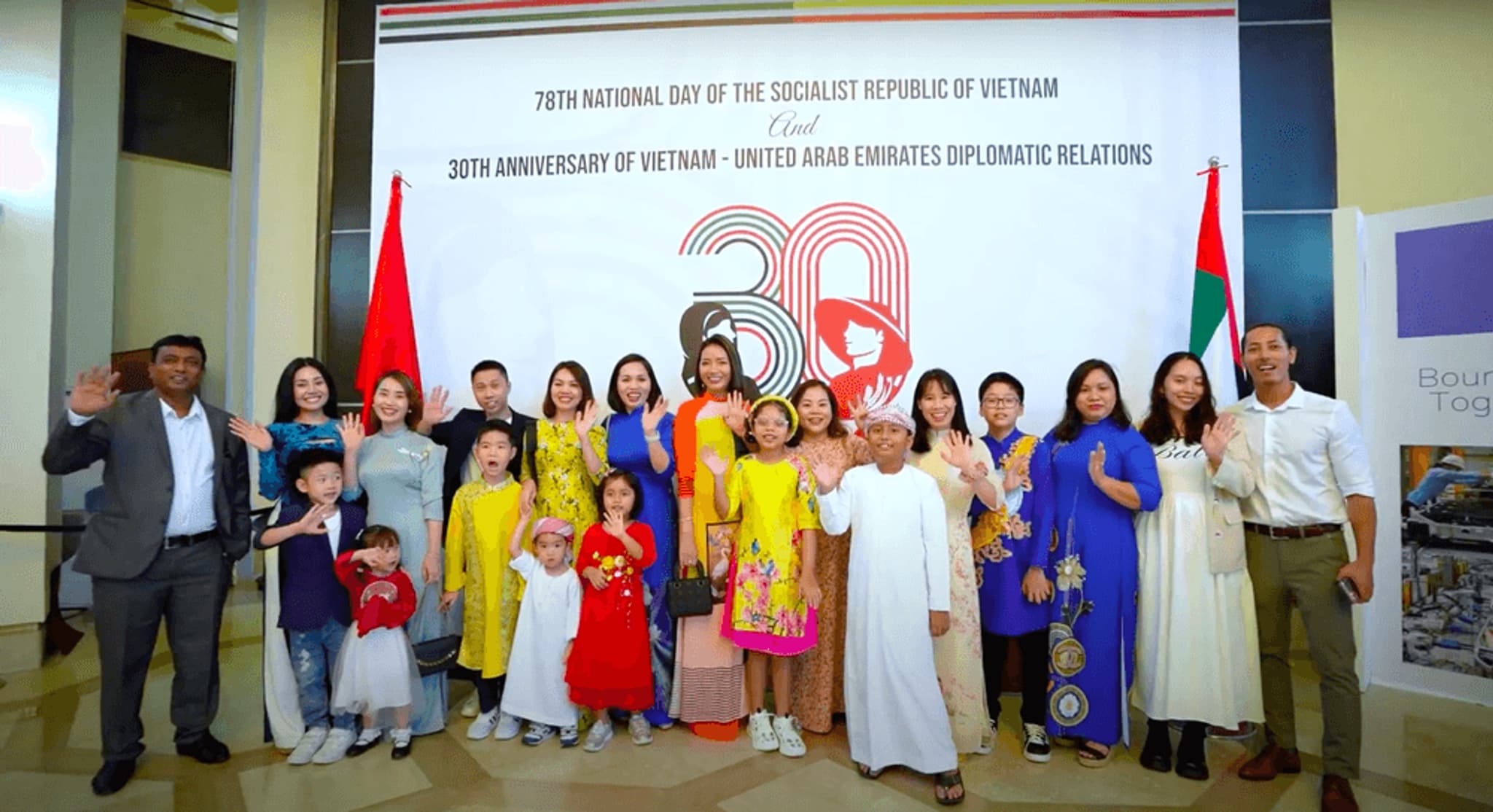
The mark was unveiled as part of Vietnam’s National Day celebration in Abu Dhabi, where it appeared across venue decoration, publications, and media. That range matters because a public identity is never seen in isolation. It has to share space with flags, institutional names, event information, and the practical demands of the channel.
We test the mark against those conditions early. Can it be understood at a distance? Does it hold its shape in a small digital space? Does it work in one color? Can it sit beside both national identities without competing with them? Can a partner use it without the original designer supervising every application?
For this project, clarity was not a compromise to symbolism. It was how the symbolism became usable. The forms needed to remain legible, the composition needed to survive different scales, and the identity needed to operate across ceremonial and everyday communication. A public symbol earns trust partly through what it refuses to make difficult.
When we approach a symbol with public or diplomatic meaning, five questions guide the work:
- What relationship is being made visible? Define the human and institutional meaning before choosing motifs.
- Which references deserve to be present? Choose specific cultural signals that can carry meaning, not a checklist of decoration.
- How should the references meet? Use composition, proportion, rhythm, and space to express the relationship between them.
- Where will the symbol have to work? Test real scales, materials, channels, and neighboring marks before the final presentation.
- How will other people carry it forward? Equip partners with a system that protects the essentials while leaving room for context.
The ceremony in Abu Dhabi gave the identity a public moment. Its longer life is in the memories and associations it helps organize. An anniversary is temporary. A well-made symbol can become a reference point for the relationship it commemorates.
That is the core of CDA’s approach. We do not begin by asking how to make a logo look official. We ask what the identity must help people understand, what it must respect, and where it must work. Then we build a visual system that can carry those decisions with enough clarity to travel.
The final measure is not whether every viewer can recite the design rationale. It is whether the symbol creates recognition without erasing difference, and whether it makes the relationship feel present rather than merely historical.
